


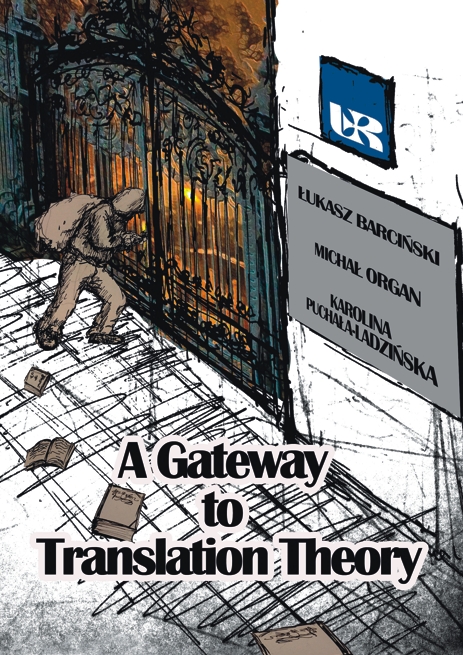
A Gateway to Translation Theory
Nauki humanistyczne Filologia Angielska Filologie obce
Dostępny
Szczegóły wydania
- ISBN
- 978-83-7996-303-4
- Rok wydania
- 2016
- Liczba stron
- 128
- Format
- B5, Oprawa: broszurowa
- Cena katalogowa
- 15,75 zł (z VAT)
Opis
CONTENTS TABLE OF ABBREVIATIONS INTRODUCTION 1. EQUIVALENCE PARADIGM (Michał Organ) 1.1. Introduction 1.2. Equative view of equivalence 1.3. Taxonomic view of equivalence 1.3.1 Formal correspondence & dynamic equivalence 1.3.2. Formal correspondence & textual equivalence 1.3.3. Semantic & communicative translation 1.3.4. Äquivalenz & Korrespondenz 1.4. Relativists’ view of equivalence 1.4.1. Descriptive & theoretical equivalence 1.4.2. Direct & indirect translation 1.5. Functional translation 1.5.1. Functional translation 1.5.2. The skopos theory 2. TRANSLATION AS A PROCESS AND A PRODUCT (Karolina Puchała-Ladzińska) 2.1. The notion of translation: a bone of contention 2.2. Producing a “good” translation: producing the impossible? 2.2.1. The function of translation: to domesticate or to foreignize? That is the question 2.2.2. Translator – a faithful friend or a traitor? On faithfulness and freedom in translation 2.3. Is translation really worth the effort? On the phenomenon of (un)translatability 2.3.1. Language and its multiple traps: on linguistic (un)translatability 2.3.2. Culture and its multiple traps: on cultural (un)translatability 2.4. What exactly does the translator have in mind? – translation as a decision-making process 2.4.1. Translation process and its stages 3. LITERARY TRANSLATION IN THE CONTEXT OF GENERAL TRANSLATION THEORY (Łukasz Barciński) 3.1. Ubiquitous dichotomies 3.1.1. (non) verbum pro verbo 3.1.2. Linguistically oriented theory 3.1.3. The binary saga 3.1.4. Possible alternatives 3.2. The turns of translation studies 3.3. Unit of translation 3.4. Interdisciplinarity 3.5. Translation theories related to literary works 3.5.1. Translator’s codes 3.5.2. The dominant 3.5.3. Intertextuality 3.6. The foreign and the familiar 3.7. Translation by metaphors CONCLUSION REFERENCES
Zobacz również
-
“Hyphenated” identities: The Issue of Cultural Identity in Selected Ethnic American Autobiographical Texts
10,50 zł 5,25 złDostępny
Najniższa cena z 30 dni przed obniżką: 10,50 zł
-
Main Trends in Historical Semantics (skrypt)
15,75 zł 3,15 złDostępny
Najniższa cena z 30 dni przed obniżką: 15,75 zł
-
-
Translating Popular Science Articles: Towards a Reader-Oriented Approach
15,75 zł 5,25 złDostępny
Najniższa cena z 30 dni przed obniżką: 15,75 zł


